
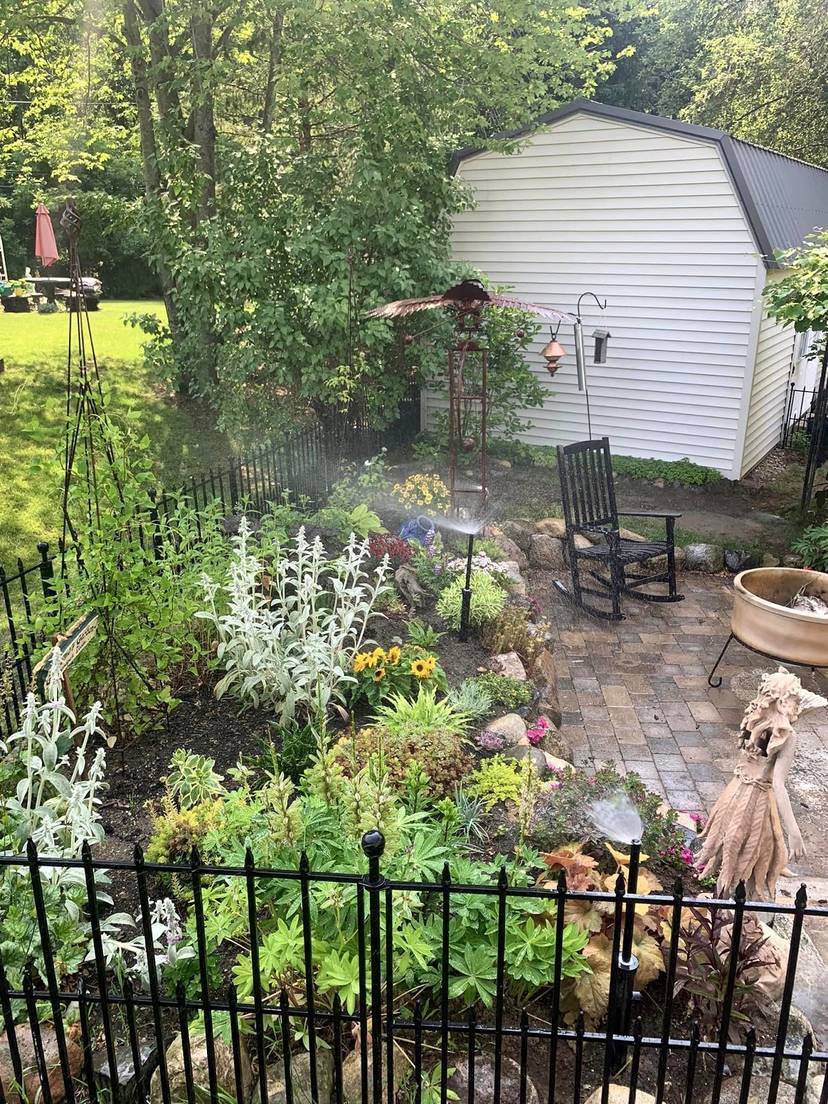
Drip irrigation for pots and beds in Fenton, MIWater the roots, not the patio.
Pots that are dry by noon, beds the lawn heads cannot reach, planters nobody remembers when you are away. We run drip lines to each one and put them on their own zone of your sprinkler controller.
- 5.0 on Google, 40 reviews
- Pots, planters and beds
- Same controller as the lawn
What drip is
A slow drink, right where the roots are.
Drip is low pressure watering. Instead of throwing water across a bed, it lets water out a little at a time at the base of each plant.
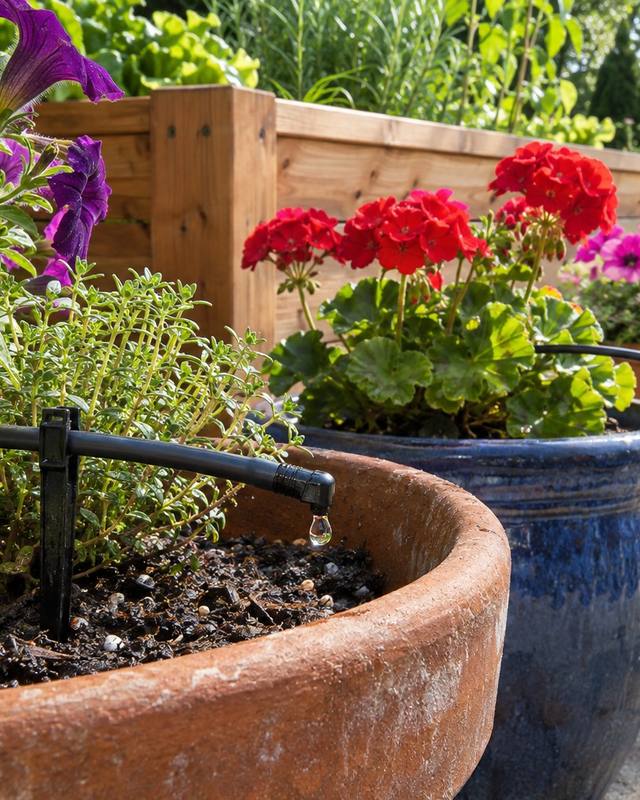
A half inch line runs along the bed or the edge of the patio. Thin quarter inch tubing branches off it to each pot, and an emitter at the end lets out a measured amount, rated in gallons per hour. A bigger pot gets a bigger emitter, or two. The leaves stay dry, the walk stays dry, and very little runs off.
It is fed from your sprinkler system through its own valve, so it runs on the same controller as the lawn, on its own schedule.
- Flowerpots and planters on patios, porches and decks
- Window boxes and hanging baskets a line can reach
- Annual and perennial beds the lawn heads do not cover
- Shrubs and young trees that want slow, deep water
The parts
Small parts, each with a job.
A drip zone is simple, but every part is there for a reason. Leave out the filter or the regulator and it does not last.
Valve
Its own zone
Drip gets its own valve and its own station on the controller. It never shares a zone with spray heads, because the two need different pressure and very different run times.
Filter
A fine screen up front
Emitter openings are tiny. A fine mesh filter at the start of the zone catches the grit that would plug them, and it gets rinsed out at startup.
Regulator
Pressure brought down
Sprinkler lines run at house or pump pressure. Drip is built for far less, roughly 20 to 30 psi. Without a regulator, fittings come apart and emitters pop out of the line.
Line and tubing
Half inch out, quarter inch in
The half inch line carries water along the bed. Quarter inch tubing runs from it to each pot, tucked along the edge or up the back so it is hard to see.
Emitters
Sized to the pot
Each emitter lets out a set amount, from about half a gallon an hour to a few gallons. Sizing them to the pot is how a small pot and a big planter both come out right on one run.
End caps
A way to flush it
The far end of each line closes with a cap that comes off. Opening it flushes out grit in spring and lets the line drain in fall.
Pots and beds
Hand watering, spray heads or drip.
Three ways to water a patio full of pots or a bed along the house, side by side.
Hand watering
- Where it lands
- Wherever the hose points
- Pots in July
- Every day, by you
- Leaves
- Often wet
- Away for a week
- Someone has to come by
- Water lost
- Depends on the hand
Spray heads
- Where it lands
- Over leaves, mulch and the walk
- Pots in July
- Most of it misses the pots
- Leaves
- Wet every run
- Away for a week
- Runs, but the pots still dry out
- Water lost
- Plenty, to wind and pavement
What we recommend
Drip
- Where it lands
- At the base of each plant
- Pots in July
- Each pot gets its own measured share
- Leaves
- Stay dry
- Away for a week
- Runs on the timer as usual
- Water lost
- Very little
GPH
drip runs in gallons an hour, sprays in gallons a minute
Why drip gets its own zone
Gallons an hour against gallons a minute.
A spray head is rated in gallons per minute. A drip emitter is rated in gallons per hour. Put them on one valve and nothing works right: a regulator for the drip starves the sprays, full pressure blows the drip apart, and no single run time suits both. That is why drip always gets its own valve and its own schedule.
Adding a drip zone
How we put drip on your system.
Pots and beds planned
We walk the patio and the beds with you, count the pots, and work out where the line runs so it stays hidden and out from under foot.
A new zone tapped in
A new valve comes off your existing system, with the filter and regulator right after it, and gets wired to an open station on the controller.
Line and tubing run
The half inch line goes along the bed edge or under the mulch, and quarter inch tubing runs to each pot with the right emitter for its size.
Schedule set
Drip gets its own start times and longer runs than the lawn. Pots in full sun often need water every day in high summer, while beds in the ground go longer between runs.
Every pot checked
We run the zone, check that each emitter drips, and show you how to rinse the filter and flush the line.
If the controller has no open station, it needs an add-on module or a larger controller. See controller installation and setup.
In the fall
Drip needs a blowout too.
Drip tubing is flexible, but the valve, the filter and the regulator all hold water, and a fitting full of ice splits.
At the fall blowout, the drip zone is drained and cleared with low pressure air, with the end caps open so the water has somewhere to go. Drip takes gentle air. Pushing it at the pressure used on lawn zones blows fittings and emitters apart.
Pots that come inside for winter get unhooked at the tubing, and the open ends are capped or tucked up so dirt and bugs stay out until spring.
- Filter screen pulled and rinsed
- Lines drained at the end caps
- Zone cleared with low pressure air
- Tubing to indoor pots unhooked and capped
Reviews
What customers say.
5.0
From 40 reviews on Google.
What people mention most
- Promptness6
- Reasonable pricing5
- Sprinkler repair3
- Winterization3
- Leak repair2
- Hardworking staff2
Misty’s Irrigation came out to repair and inspect our lawn irrigation system and did a great job. Very knowledgeable, professional, and just great people to work with. It’s always nice being able to support a local Fenton business, especially when they provide this kind of service. Highly recommend!
Quick to respond to phone message. Scheduled service call and took great care of my sprinkler system, replacing 2 sprinkler heads and checked all of the others. I highly recommended this company for their services
Misty’s did some repair work at a fair price. Staff was very pleasant, on time and cleaned up well in addition to excellent communication. Will use them in the future for any sprinkler system needs without it a doubt!
Questions
What people ask about drip irrigation.
The things people ask before booking. If yours is not here, call or text (810) 423-9513.
Can drip run on the same controller as my lawn sprinklers?
Yes, and that is the usual way to do it. The drip gets its own valve and its own station on your controller, with its own start times and run times. If the controller is out of stations, it needs an add-on module or a larger controller. See controller installation and setup.
Can you turn one sprinkler head into drip for a bed?
Not by itself. A zone runs spray heads or drip, never both, because they need different pressure and different run times. If every head on a small bed zone is converted, that whole zone can become drip. Otherwise the bed gets a new drip zone of its own.
How often should my pots be watered?
More often than beds. Pots dry out fast in sun and wind, and many need water every day in the heat of summer, small ones sometimes twice. Beds in the ground usually do fine every few days. We set a starting schedule, and after a week you check the soil with a finger and we adjust from there.
Will the emitters clog?
They can, which is why the filter matters. A fine mesh filter catches grit before it reaches the emitters, and rinsing it at startup and now and then in summer keeps it clear. On lake water or well water, the filter has more to catch and gets checked more often. An emitter that does clog can be cleaned or swapped in a minute.
What about a bed packed solid with plants?
A bed planted wall to wall can take small micro spray or mist heads instead of emitters. They sit low, throw a fine spray across the bed, and run on the same low pressure drip zone, with the same filter and regulator.
Can drip reach hanging baskets and window boxes?
If a line can get to them, yes. Quarter inch tubing runs up a post, a railing or along a wall to the basket or box, with an emitter at the end. We route it so it is tidy and out of the way.
Does drip need anything in the fall?
Yes. It gets drained and cleared with low pressure air, with the end caps open, and the filter screen comes out and gets rinsed. Tubing to pots that come inside gets unhooked. If we do your fall blowout, the drip zone is part of it.
Drip irrigation for pots and beds near you
Also
Often booked with this.
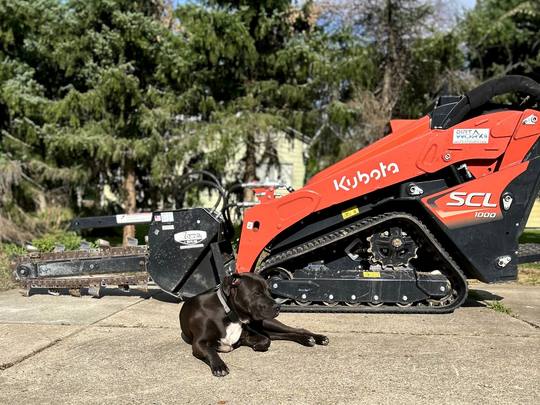
Sprinkler system installation
New systems and added zones, laid out head to head for the yard you actually have.
Learn more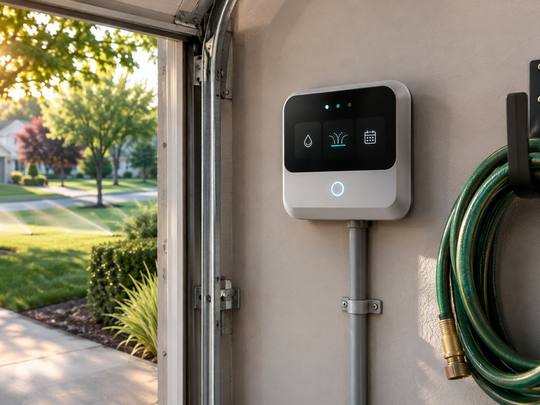
Controller installation and setup
New and smart controllers wired, zoned and programmed for your yard, not left on the factory default.
Learn more
Spring sprinkler startup
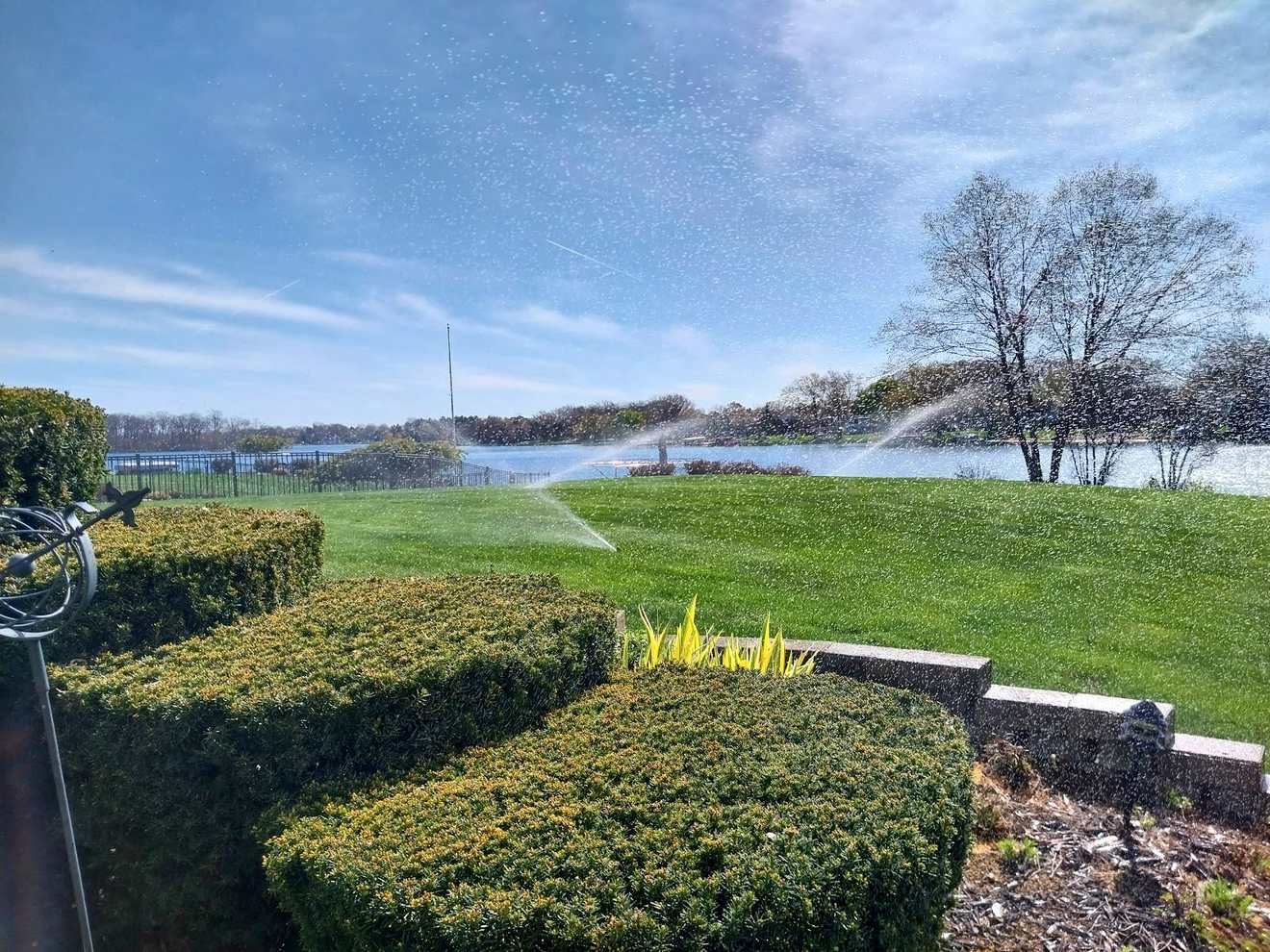
Water on slowly, every zone run and checked, heads adjusted and the controller set for the season.
Learn more
Book service
Tell us about the pots and beds.
How many pots, where they sit, what is in the beds. Send it here or text a photo of the patio, and we will call back to set a time.
- A real person calls you back. Promptness is what reviewers mention most.
- Fair, clear pricing. That is the second thing they mention.
- Licensed and insured, family run out of Fenton.