
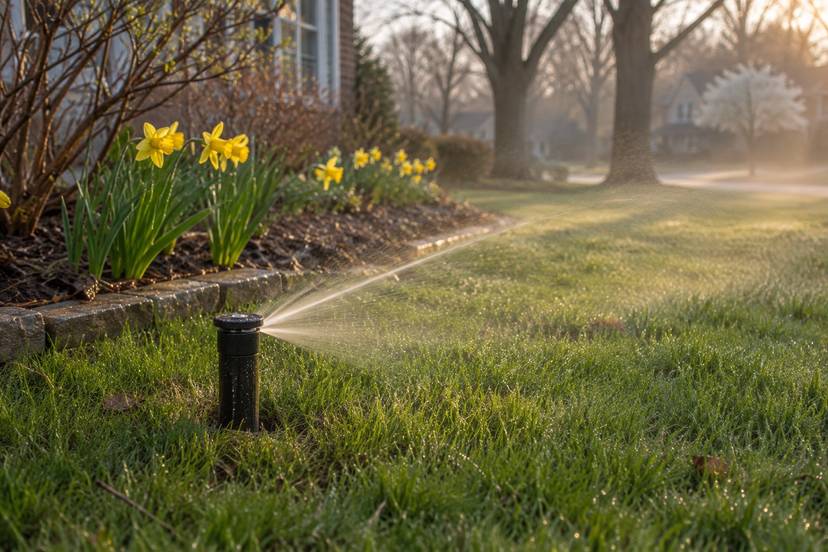
Spring sprinkler startup in Fenton, MIFill it slowly, then run every zone.
Your system sat empty all winter. We fill it slowly so nothing gets jolted, open the backflow device in the right order, run and watch every zone, fix what the winter broke, and set the controller for spring.
- 5.0 on Google, 40 reviews
- Every zone run and checked
- Licensed and insured
Illustration
What a startup is
The fall blowout, run in reverse.
In the fall we push the water out with air. In spring it goes back in, and how it goes back in matters more than most people think.
After a winter empty, the pipes are full of air. Open the supply all at once and water rushes in, then slams to a stop against a closed valve or the end of a line. That jolt is called water hammer, and it is how a healthy system cracks a fitting on the first day of the season.
So a startup is slow on purpose. The backflow device is closed up and opened in order, the main line fills a little at a time, the air is let out through the heads, and only then does each zone run. Then we go looking for whatever the winter did.
Try it
When to book a startup.
Startups run about mid April through May, once the hard freezes are over. The marker moves with today's date and the line under it says what to do now.
- Too early, and a hard frost can catch the backflow device full of water. It sits above ground, so it is the most exposed part of the system.
- If a shovel will not go a foot into the lawn, the ground is still frozen. Wait a week.
- A cool spring lawn needs far less water than a July one, so there is little to gain from turning on early.
- Spring startups
- Watering season
- Fall blowouts
Blowout season.
Get the water out before the ground freezes. A missed blowout shows up in spring as cracked pipes and a split backflow device.
The visit
What a startup includes.
The same order every time. The order is what keeps the first day of the season from being the day something cracks.
Backflow device closed up
The small test cocks and any drains left open for winter get closed, and the ball valves on the backflow device are set so it fills under control, not all at once.
Water on slowly
The irrigation shutoff, usually in the basement, opens a little at a time, then the backflow device's ball valves open slowly. The main fills gently and the air escapes through the heads. We watch the device for freeze cracks as it fills.
Every zone run and watched
Each zone runs in turn while we walk it. Heads that sputter air for the first minute are normal. Heads that do not rise, leak at the base or fall short of the next head get noted.
Heads cleaned, raised and aimed
Clogged nozzles flushed, sunk heads brought back up to the soil line, tilted ones straightened, and spray patterns turned back onto the lawn and off the drive.
Leaks and winter damage found
Wet spots, weak zones, water standing in valve boxes, anything the frost split. You hear what we found and what it takes before any repair, and you decide.
Controller set for spring
Date and time set, the backup battery that holds the clock through a power outage checked, the rain sensor checked if there is one, and each zone given a spring run time, not last August's.
A system that pulls from the lake also needs its pump primed and its intake checked first. See lake pump systems.
What winter leaves
What a startup usually turns up.
Most systems come through a winter fine. These are the things we find on the ones that did not, and what causes them.
Backflow device
Water spraying from it
Water left inside over the winter froze and cracked the body or the cap on top. It needs fixing before the season starts, because that device keeps lawn water out of your drinking water. More on backflow devices.
One zone weak
A split pipe or fitting
Ice in a low spot cracked a fitting or the pipe itself. The zone runs weak at every head, and a soggy or bubbling patch in the lawn marks where the break is.
Heads high, low or leaning
Frost and settling soil
Ground that freezes and thaws can lift a head, tip it over or leave it sunk under the turf. Each one gets reset level with the soil and straight up.
Weak or ragged spray
Grit in the nozzle
Dirt from a repair, a broken head or well water lodges in the small screen under the nozzle. Cleaned out, the head throws its full distance again.
Zone will not stop
Debris in a valve
Grit in the lines can catch under a valve's rubber diaphragm and hold the zone open. Cleaning the valve usually fixes it. More on valve repair.
Wrong days, wrong hours
A controller that lost its clock
A dead backup battery plus a winter power outage can reset the clock, so the program runs at the wrong time. A new battery and a reset fix it. More on controllers.
1 in.
of water a week in summer, rain included
Setting the controller
Set it for spring, not for July.
Most lawns want about an inch of water a week in midsummer, rain included, and much less in a cool, wet spring. A controller still on last summer's program waters an April lawn as if it were July: soggy soil, water down the drain and a bigger bill. We set spring run times at startup, and they go up as the weather warms. The watering guide has the numbers.
Reviews
What our customers say.
5.0
From 40 reviews on Google.
What people mention most
- Promptness6
- Reasonable pricing5
- Sprinkler repair3
- Winterization3
- Leak repair2
- Hardworking staff2
Misty’s Irrigation came out to repair and inspect our lawn irrigation system and did a great job. Very knowledgeable, professional, and just great people to work with. It’s always nice being able to support a local Fenton business, especially when they provide this kind of service. Highly recommend!
Quick to respond to phone message. Scheduled service call and took great care of my sprinkler system, replacing 2 sprinkler heads and checked all of the others. I highly recommended this company for their services
Misty’s did some repair work at a fair price. Staff was very pleasant, on time and cleaned up well in addition to excellent communication. Will use them in the future for any sprinkler system needs without it a doubt!
Where we work
Spring startup in your town.
Each town has its own page with the details for that area.
Questions
What people ask about spring startup.
The things people ask before booking. If yours is not here, call or text (810) 423-9513.
When should I schedule my spring startup?
About mid April through May, once the hard freezes are over and the ground has thawed. A quick test: if a shovel will not go a foot into the lawn, it is too early. Getting on the list over the winter or early in spring puts you ahead of the April rush. Book a startup or call or text (810) 423-9513.
Can I just turn the water back on myself?
You can. The risk is all in the first minute: a shutoff opened all the way into empty pipes, or a backflow device opened out of order, is what cracks fittings. If you do it yourself, close the test cocks and drains first, open everything slowly, and let the air out through the heads. Then run every zone and look for what the winter broke, which is the part a startup visit is really for.
My system was not winterized last fall. Can you still start it up?
Yes. Tell us when you book. Water left in the lines may have frozen and split a pipe, a valve or the backflow device. We fill it slowly, watch for leaks as it comes up to pressure, and show you anything that cracked before we fix it.
What happens if you find something broken?
We show you what it is and tell you what it takes before we touch it. Many common repairs, like a cracked head, a split fitting or a stuck valve, can be done during the same visit. If a part has to be ordered, we tell you and come back. More on sprinkler repair.
Water is spraying out of my backflow device. What happened?
Most often it froze. Water left inside over the winter expands as it turns to ice and cracks the body or the cap on top, and it stays hidden until the water comes back on. Close the irrigation shutoff, usually in the basement, and call or text (810) 423-9513. We repair and replace pressure vacuum breakers.
Do I need to be home for the startup?
Only if we need to get inside. The irrigation shutoff is usually in the basement and the controller is often in the garage, so someone has to let us reach them. If both are outside or easy to get to, tell us when you book and we will work it out.
How long should my zones run in spring?
Less than in summer. Most lawns want about an inch of water a week in midsummer, rain included, and less in a cool spring. How many minutes that takes depends on the heads: spray heads put water down about three times as fast as rotors, so spray zones run shorter. We set a spring schedule at startup, and the watering guide walks through the math.
Do you start up lake pump systems?
Yes. A system that pulls from the lake needs its pump primed and its intake and suction line checked before any zone runs. More on lake pump systems.
Also
Often booked with this.
Sprinkler winterization
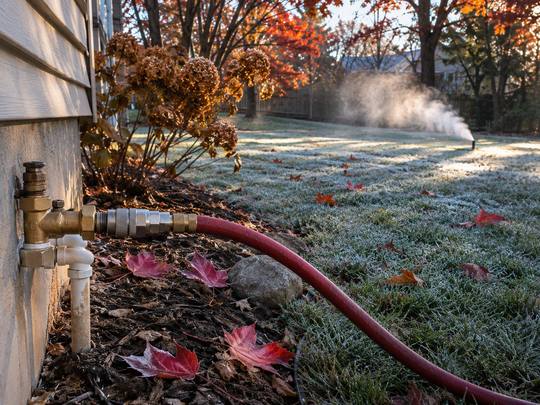
A compressed air blowout, zone by zone, so no water is left in the lines when Michigan freezes.
Learn more
Sprinkler repair
Broken heads, leaks, dry spots, zones that will not start or will not stop. Found, explained and fixed.
Learn more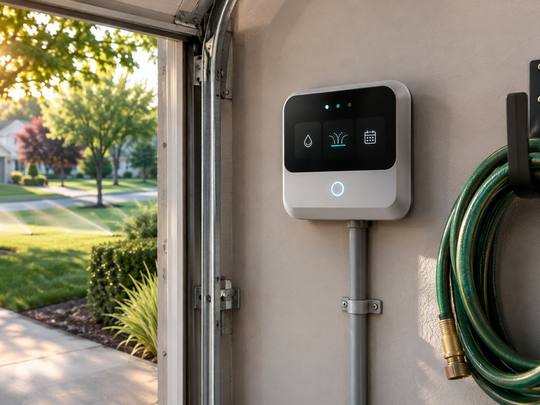
Controller installation and setup
New and smart controllers wired, zoned and programmed for your yard, not left on the factory default.
Learn more
Book service
Get on the spring startup list.
Send your address and anything you noticed last season, like a weak zone, a soggy spot or a head that never popped up. We will call back to set a time.
- A real person calls you back. Promptness is what reviewers mention most.
- Fair, clear pricing. That is the second thing they mention.
- Licensed and insured, family run out of Fenton.