
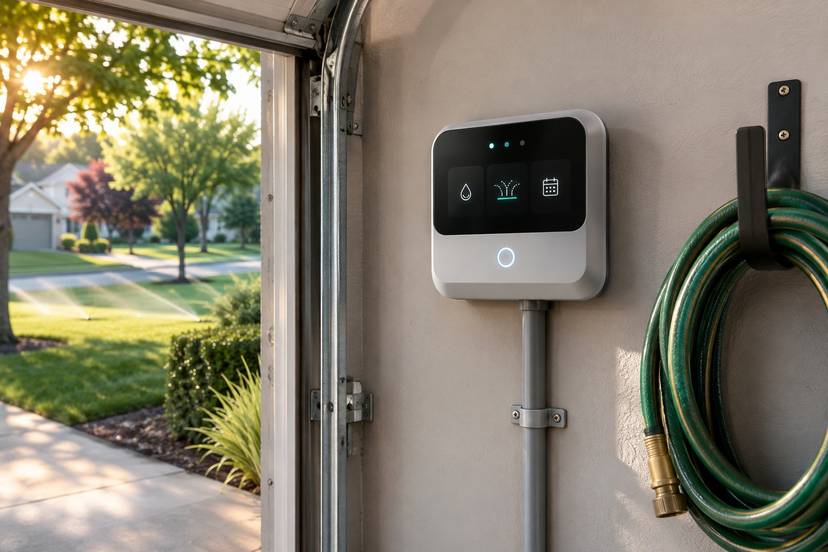
Sprinkler controller installation and setup in Fenton, MISet by the zone, not the factory default.
A controller left on its first schedule waters every zone the same, in May and in July. We install new and smart controllers, wire them right, and program each zone for its heads, its sun and its soil.
- 5.0 on Google, 40 reviews
- Every zone programmed
- Smart and standard
- Licensed and insured
Illustration
When to replace it
Signs the old timer is done.
The controller is the box in the garage that tells each valve when to open and for how long. When one starts to fail, it rarely goes all at once.
Before we replace anything, we check whether the trouble is the controller or the yard. A station fault is more often a valve or a wire than the box itself, and a new controller will not fix a cut wire.
- A blank, faded or flickering display
- The program disappears every time the power blinks
- Zones that skip, run on the wrong days or run twice
- No open stations for a new zone or a drip line
- Worn buttons and a dial nobody can read anymore
- You want it to adjust for the weather on its own
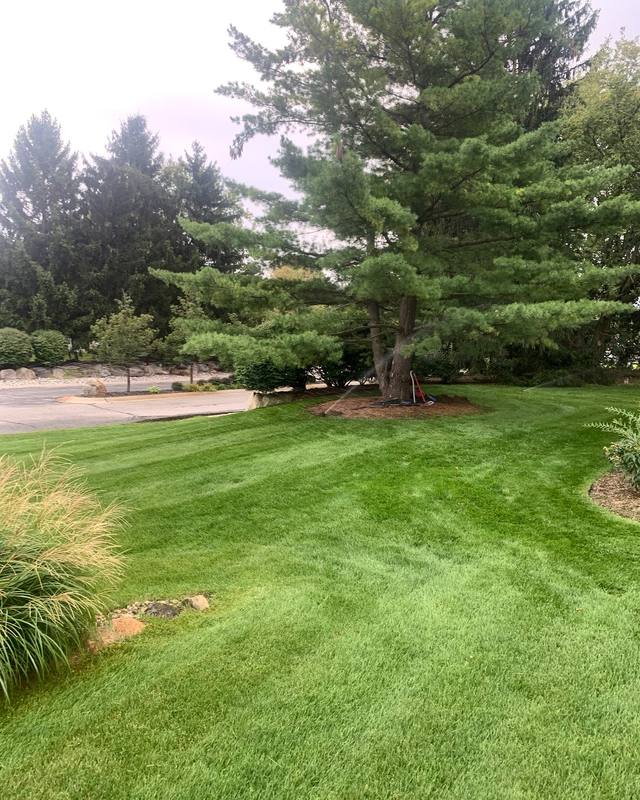
Programming
Every zone gets its own numbers.
A zone of spray heads and a zone of rotors can sit side by side and need very different run times. This is what goes into each zone's program.
Spray heads
Short runs, often split
Sprays put water down fast, around an inch and a half an hour. They get short runs, often split in two so the water has time to soak in.
Rotors
About three times longer
Rotors put down about half an inch an hour, a third of what sprays do, so a rotor zone runs about three times as long for the same water.
Rotary nozzles
The longest lawn zones
Rotary nozzles are slower still, around 0.4 inches an hour. The water soaks in well, and these zones run the longest of the lawn.
Drip
Its own program
Drip is measured in gallons per hour, not inches. Pots may want it daily in summer and beds every few days, so it usually runs on a program of its own.
Shade and slope
Less time, shorter cycles
A shaded zone needs less water than one in full sun. A slope sheds water fast, so its time gets split into short cycles with a soak between.
Soil
Clay and sand differ
Clay takes water in slowly and holds it, so it gets fewer, split waterings. Sand drinks fast and dries fast, so it gets watered more often.
Try it
How long should each zone run?
Pick the kind of heads on a zone, how much sun it gets, the month and your soil. The calculator works out a starting run time, and splits it into cycles when the water would run off.
- It starts from about an inch of water a week in summer, rain included, a little more in July and less in spring and fall.
- Slide the rain up to see why a rain sensor or a smart controller saves water.
- It is a starting point. On a real system we set each zone by watching where the water lands and how fast it soaks in.
Your options
Timer, rain sensor or smart controller.
Three ways to run the same system, from the simplest to the most automatic. Any of them works well when every zone is programmed right.
Standard timer
- How it decides
- Runs the schedule you set
- After a wet week
- Waters anyway
- A hot July
- Same minutes as May unless changed
- Changing it
- Buttons at the box
- What it needs
- Power
Timer and rain sensor
- How it decides
- Runs your schedule, skips after rain
- After a wet week
- Holds off until the sensor dries
- A hot July
- Same minutes as May unless changed
- Changing it
- Buttons at the box
- What it needs
- Power, and a sensor out in the rain
Smart controller
- How it decides
- Adjusts your zones to the weather
- After a wet week
- Skips or shortens the runs
- A hot July
- Adds time as the weather heats up
- Changing it
- At the box or from a phone app
- What it needs
- Power, and usually Wi-Fi where it hangs
1.5
inches of water an hour from a typical spray head
Cycle and soak
Water faster than the ground drinks runs down the driveway.
A spray zone puts down about an inch and a half of water an hour. Clay and packed soil take it in far slower than that, so one long run puddles and runs off into the street. Cycle and soak splits the time: run the zone, let it soak in, run it again. The same total water ends up in the root zone instead of the gutter.
The install
How a controller swap runs.
Wires labeled
Before the old controller comes off the wall, every wire is tagged to its zone, so nothing gets crossed.
Mounted and wired
The new one goes up near an outlet, indoors unless it is built for outside. Each zone wire lands on its station, along with the common wire, the rain sensor and the pump relay if there is one.
Every zone run
We run each zone from the new controller to prove the wiring, and track down any valve or wire that does not answer.
Programmed by zone
Each zone gets run times for its heads, sun, slope and soil, cycle and soak where it needs it, and start times early in the morning.
Connected and shown
A smart controller gets connected to your Wi-Fi and its app. Then we show you how to skip a day, run a zone by hand and adjust for the season.
On a lake or well system, the controller also starts the pump through a relay, and that gets wired and set for every zone. See lake pump irrigation.
Reviews
What customers say.
5.0
From 40 reviews on Google.
What people mention most
- Promptness6
- Reasonable pricing5
- Sprinkler repair3
- Winterization3
- Leak repair2
- Hardworking staff2
Misty’s Irrigation came out to repair and inspect our lawn irrigation system and did a great job. Very knowledgeable, professional, and just great people to work with. It’s always nice being able to support a local Fenton business, especially when they provide this kind of service. Highly recommend!
Quick to respond to phone message. Scheduled service call and took great care of my sprinkler system, replacing 2 sprinkler heads and checked all of the others. I highly recommended this company for their services
Misty’s did some repair work at a fair price. Staff was very pleasant, on time and cleaned up well in addition to excellent communication. Will use them in the future for any sprinkler system needs without it a doubt!
Questions
What people ask about controller setup.
The things people ask before booking. If yours is not here, call or text (810) 423-9513.
Do I need a smart controller?
Not always. A standard controller, programmed well and adjusted a few times a season, waters a lawn just fine. A smart controller earns its spot if you never touch the settings, are away a lot, or want watering to back off in wet weather without thinking about it. We will tell you which fits the way you use it.
What does a smart controller actually do?
It changes your run times with the weather: hotter and drier means more water, cool and wet means less or none. Many pull local weather over Wi-Fi, and some use a sensor on site. It is only as good as what it knows about each zone, so we set the head type, sun, soil and slope for every one.
What is a rain sensor, and do I need one?
A small sensor mounted where rain falls on it, usually on a gutter or the edge of the roof, and wired to the controller. When it gets wet it tells the controller to hold off, and watering resumes as it dries. It is a simple add-on for a standard controller. Smart controllers can skip for rain on their own, and many can take a sensor as well.
What time of day should my sprinklers run?
Early morning, finishing around sunrise. There is less wind and less evaporation, the water has time to soak in, and the grass dries off during the day. Watering in the evening leaves the lawn wet all night. The watering guide has more on how much and how often.
Why do my sprinklers run while it is raining?
A standard controller only knows the clock. Without a rain sensor or a smart controller, it runs on schedule no matter what the sky is doing. Adding a sensor is a small job. Until then, turn the controller to its off or rain setting when a wet stretch is coming.
My controller loses its settings when the power goes out. Is it broken?
Maybe not. Many older controllers keep the program alive on a backup battery, and a dead battery means a blank slate after every outage, so start with a fresh one. If the controller is old or acting up in other ways too, it may be time to replace it. Most newer controllers hold their program without a battery.
Can you add a zone to my controller?
If it has an open station and there is a wire to the new valve, yes. If every station is taken, many controllers accept an add-on module. If yours does not, it gets replaced with one that has room. See new systems and added zones.
Should the schedule change during the summer?
Yes, or the controller should change it for you. Many standard controllers have a seasonal adjust that turns every zone up or down by a percentage: lower in spring and fall, higher in July. A smart controller does that on its own from the weather.
Controller installation and setup near you
Also
Often booked with this.
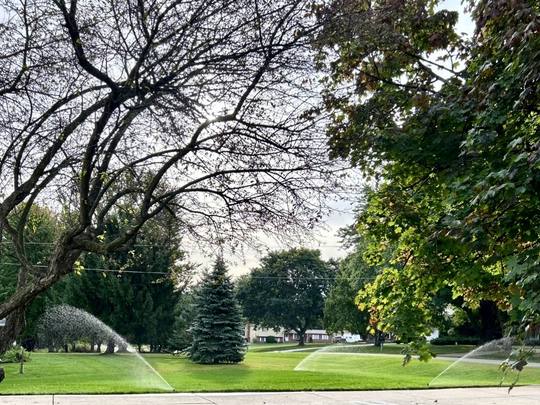
Sprinkler repair
Broken heads, leaks, dry spots, zones that will not start or will not stop. Found, explained and fixed.
Learn more
Sprinkler system installation
New systems and added zones, laid out head to head for the yard you actually have.
Learn more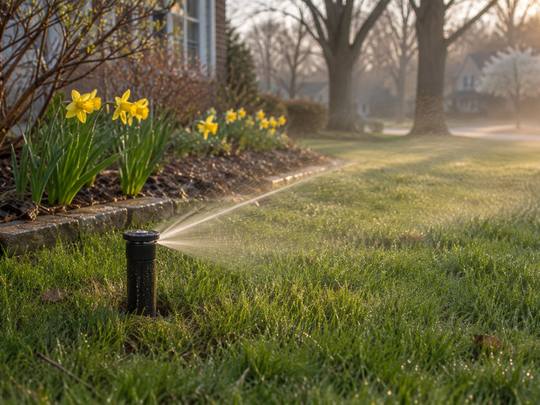
Spring sprinkler startup
Water on slowly, every zone run and checked, heads adjusted and the controller set for the season.
Learn more
Book service
Tell us about the controller.
What it is doing, how many zones it runs, or what you want it to do. Send it here or text a photo of the box, and we will call back to set a time.
- A real person calls you back. Promptness is what reviewers mention most.
- Fair, clear pricing. That is the second thing they mention.
- Licensed and insured, family run out of Fenton.